

If you’re a dog owner like me, you’ve probably wondered countless times what’s truly happening in your dog’s mind. Questions like, “What does my dog understand?” “How does my dog perceive the world?” and “How can I deepen the bond I share with my dog?” are likely familiar. Dogs, our loyal companions, hold a unique and often underestimated intelligence that is both fascinating and heartwarming to explore. While social media is full of tips about training and behavior, it’s essential to ground our understanding in something deeper: scientific knowledge.
This search led me to an extraordinary book, “The Genius of Dogs: How Dogs Are Smarter Than You Think,” by renowned researcher Brian Hare and science journalist Vanessa Woods. This isn’t a training manual or a guide on correcting behaviors; rather, it’s a compelling exploration of dog cognition, delving into the heart of what makes our canine friends uniquely intelligent and emotionally insightful companions.

I first encountered Brian Hare through his eye-opening online course, “Dog Emotion and Cognition,” available on Coursera. His thoughtful, evidence-based approach sparked my curiosity, prompting me to explore further through his book. From the first chapter, Hare and Woods masterfully blend scientific insights with relatable stories, painting a vivid picture of the complex cognitive world of dogs. They highlight how dogs have evolved sophisticated skills to interpret human emotions and gestures, making them exceptionally adept at communicating and connecting with us.
What makes “The Genius of Dogs” remarkable and different from other dog-related literature is its strong foundation in scientific research and its accessible narrative. The authors bring to life decades of studies and experiments, unveiling that the true genius of dogs lies in their social cognition, skills refined over thousands of years of close coexistence with humans. Hare and Woods revolutionize the way we view dog intelligence, shifting the conversation away from traditional obedience-focused views to one that appreciates dogs as emotionally complex and cognitively advanced beings.
Throughout the book, Hare and Woods present fascinating experiments and case studies that demonstrate dogs’ extraordinary cognitive abilities. One memorable example is the story of Chaser, the Border Collie who famously learned the names of over 1,000 different objects. Another intriguing study highlighted by the authors shows how dogs, unlike many other animals, effortlessly interpret human pointing gestures. Such anecdotes not only captivate but also effectively illustrate how dogs are adept at reading and responding to human signals, far more than we previously realized.
Additionally, the authors explore the history of dog domestication, diving into the captivating journey of how wolves became the beloved companions we know today. Rather than humans domesticating wolves, Hare and Woods suggest it was likely wolves themselves who initiated the relationship by scavenging near human settlements. This evolutionary partnership paved the way for dogs to develop their uniquely sophisticated cognitive skills tailored to human interaction, cooperation, and empathy.

This book profoundly impacted how I understand my relationship with my dog, Cookie, showing me that recognizing and appreciating her cognitive abilities can dramatically enhance our bond. Instead of viewing training purely as command and compliance, I’ve come to see every interaction as an opportunity to deepen mutual understanding and respect. Reading this book made me feel not only more informed but also more connected and compassionate towards my dog.
One of the most compelling aspects of the book for me was how Hare and Woods connect canine cognition to broader questions about intelligence in general. They challenge traditional definitions of intelligence, reminding readers that genius isn’t limited to humans or measured solely by logic and reasoning. Instead, the authors advocate recognizing various forms of genius, each suited perfectly to the unique environmental and social challenges an animal faces. Dogs, in particular, excel at navigating social dynamics and emotional cues, areas where humans themselves often struggle.
“The Genius of Dogs” doesn’t just offer insights into dogs’ minds; it also encourages reflection on our human nature. By understanding dogs better, we inadvertently gain insights into our social behaviors, emotional bonds, and ways of communicating. The parallels drawn by Hare and Woods between canine and human social skills illuminate how interconnected our evolutionary paths have been and continue to be.
In summary, “The Genius of Dogs” is an essential read for any dog owner interested in truly understanding their canine companion. It’s about much more than training or behavior management. It’s about acknowledging and appreciating the depth of canine cognition. This book invites us to see our dogs not just as pets but as intelligent, emotionally perceptive companions whose abilities have been honed through millennia of evolution and partnership with humans. Hare and Woods offer a meaningful, insightful, and ultimately heartwarming journey into the world of dog intelligence, promising to enrich our relationships with our beloved pets profoundly.
An additional highlight of Hare’s work is his creation of the Dognition platform, which has captured widespread attention in media like 60 Minutes, Dateline, and The Today Show. Dognition offers an engaging set of interactive games designed to assess five cognitive dimensions in dogs: communication, memory, reasoning, cunning, and empathy. Dogs receive a unique profile from categories such as “Ace,” “Socialite,” or “Einstein,” providing personalized insights into each dog’s cognitive style and personality.
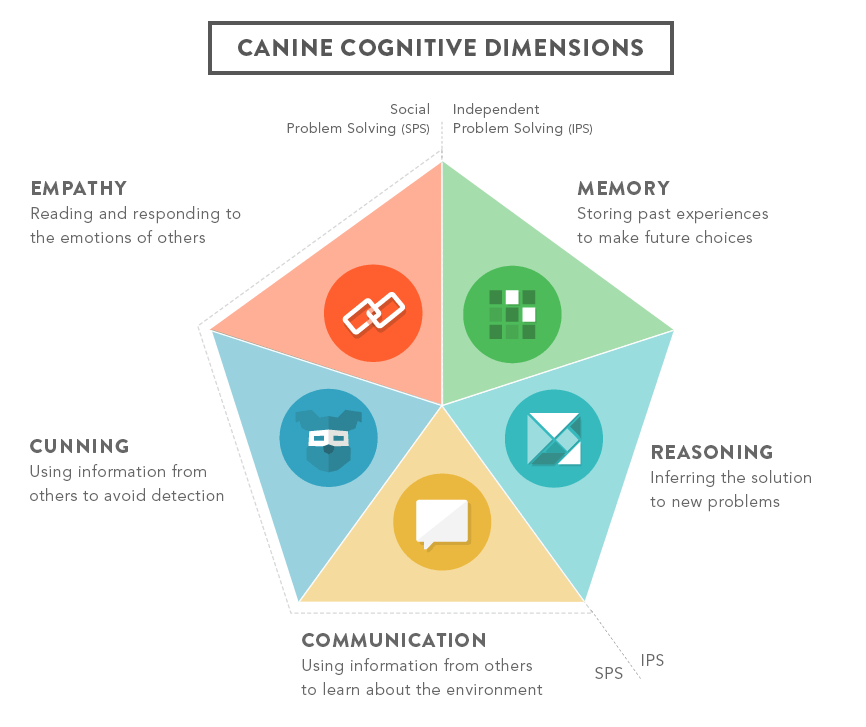
Though I haven’t yet tried Dognition myself, I’m genuinely intrigued by the potential insights it could provide about my own dog. The idea of learning more about my dog’s strengths and unique cognitive style excites me, as it could offer even more ways to connect deeply with her. I plan to explore this platform soon, and I’ll certainly share my experiences and thoughts with you here!
For other books by Brian Hare and Vanessa Woods:
Puppy Kindergarten: The New Science of Raising a Great Dog
Survival of the Friendliest: Understanding Our Origins and Rediscovering Our Common Humanity
 Bytesize Cookie
One response to “Book Review: The Genius of Dogs”
[…] –Read my review of “The Genius of Dogs” here. […]
LikeLike