

As someone whose life completely changed the moment I welcomed Cookie into my world, I quickly realized that dog ownership was nothing like I imagined. The journey has been full of hilarious mishaps, humbling lessons, and many breakthroughs. But perhaps the most significant part has been debunking the countless dog training myths I’ve stumbled upon along the way.
As fellow dog lovers, we all want the absolute best for our pups! Yet, misinformation can be overwhelming and harmful. So, let’s tackle some of these myths together, sharing both my own experiences with Cookie and the wisdom of experts who’ve guided us along the way.
Myth 1: Dogs Know When They’ve Done Something Wrong
You’ve likely seen videos where dogs give that classic “guilty” look, ears down, eyes wide, tail hesitantly wagging, as their owner holds up a chewed-up sneaker and asks, “Did you do this?” It turns out, dogs don’t actually experience guilt.

Turns out, this classic “guilty” dog face is a misconception. Dr. Alexandra Horowitz (2009) clarified that dogs don’t experience guilt as humans do. Instead, they’re responding to our cues such as our body language and tone of voice. When Cookie puts on that sheepish look, she’s actually reading my frustration and trying to diffuse tension, not admitting moral wrongdoing.
This understanding profoundly shifted how I approach training. Cookie isn’t deliberately testing my patience; she’s simply navigating a confusing human world. It’s up to me to clearly and consistently show her what’s expected, rather than expecting her to magically understand our complex human morality!
Myth 2: Playing Tug-of-War Makes Dogs Aggressive
When I first got Cookie, people warned me: “Don’t play tug-of-war, it’ll make her aggressive!” It sounded logical at first. Pulling, biting, tugging, weren’t those aggressive behaviors? Yet, Cookie had zero interest in fetch. But tug-of-war? It was like flipping a switch. She’d come alive, joyful and engaged. Thankfully, science backs up our tug-of-war adventures.
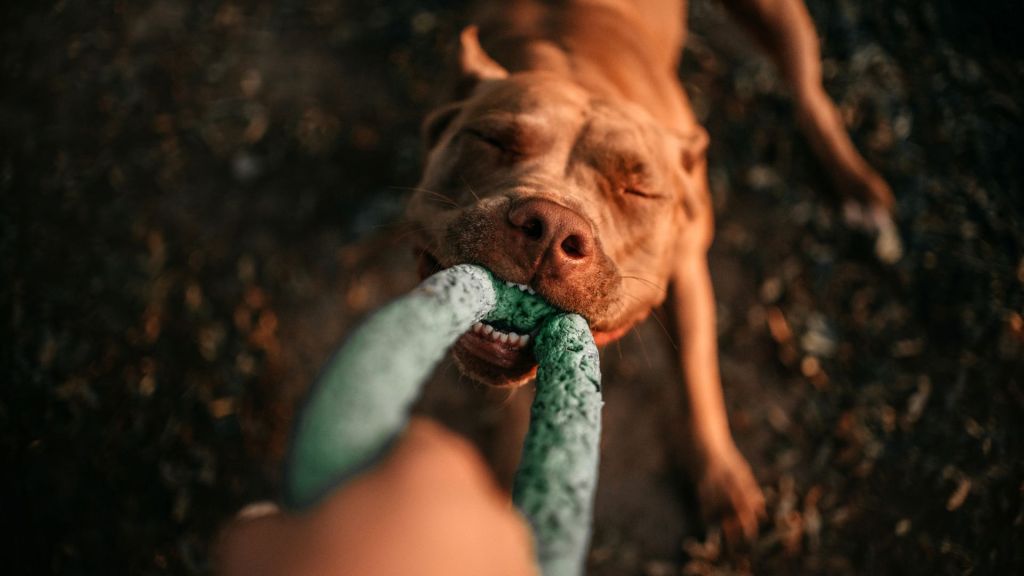
According to Rooney and Bradshaw (2003), structured tug-of-war doesn’t incite aggression but rather serves as an ideal outlet for natural instincts, especially for dogs with high prey drives, like Cookie. When we play, Cookie gets to practice her instinctual chasing, biting, and “killing” behaviors in a controlled, safe manner. Incorporating treats into her tug toys further enriches the experience, simulating a rewarding hunt.
I can say that these interactive games strengthened our bond immensely. They helped redirect Cookie’s attention away from distractions like squirrels, other dogs, and bicycles. Rather than causing aggression, tug-of-war became a lifeline for peace and a guaranteed recipe for tired, happy naps afterward.
This is a crucial point that shouldn’t be overlooked. Playing is excellent for your dog, but it’s equally important to teach them how to settle down afterward, especially for high-energy dogs like Cookie. These dogs often struggle to relax naturally, so the best opportunity to train relaxation is right after a good play session!
Find our favorite toys, including tug and flirt poles, on our Amazon Storefront!
Myth 3: Crate Training is Cruel
I think the misconception that crating a dog is cruel stems from the common practice of people using crates as punishment, which is the opposite of what crate training is intended for.
I admit, before Cookie, I shared this misconception wholeheartedly. The thought of confining a dog seemed cruel, until our vet gently suggested crate training to help with Cookie’s anxiety. Initially hesitant, I introduced the crate as a safe, comfy space filled with blankets, toys, and hidden treats. Surprisingly, Cookie quickly adapted, seeking her crate whenever she felt overwhelmed or needed downtime.

Veterinarians consistently support crate training when used correctly. According to the American Kennel Club (2021), dogs benefit from crate training because it leverages their natural instincts to seek out safe, den-like spaces, providing them with comfort and security.
Cookie’s crate became her safe haven, a place she actively sought out for peace and relaxation. This approach completely shifted my perspective, turning what I thought was cruel into something deeply caring and necessary for the well-being of my pup!
See the crates, carriers and beds we love HERE!
Myth 4: Dog Training Should Only Happen in Formal Sessions
Early on, I diligently scheduled formal training sessions with Cookie, expecting her to become obedient overnight. Reality check: it was exhausting and unrealistic for both of us. Formal sessions have their place, but integrating training into everyday activities proved far more effective.
Cookie and I embraced “micro-training moments” throughout the day. Our walks turned into opportunities for practicing patience at intersections, responding to commands around distractions, and building confidence by exploring various surfaces like benches, ramps, and uneven terrain.

Many trainers also emphasize this informal yet consistent approach, advocating for everyday training integrated seamlessly into regular routines. This approach transformed Cookie from timid and anxious to confident and engaged. And frankly, it was easier for me as a busy dog parent to consistently reinforce positive behaviors in small doses throughout our day.

P.S. I have another post all about dog parkour (also called barkour or urban agility), where we use everyday environments like empty playgrounds, tree stumps, benches, and more to create fun, engaging challenges for dogs. This activity has been incredibly helpful in building Cookie’s confidence, improving her agility, and strengthening our bond.
Myth 5: All Aggressive Dogs are Unfixable
Perhaps the myth closest to my heart and the most harmful is the notion that aggressive dogs can’t change. When Cookie first joined our family, her reactivity toward other dogs felt overwhelming. People would give us wary glances or cross the street as we approached, labeling her as a “problem dog.”
Feeling judged and disheartened, I reached out to professionals who reminded me that aggression often stems from fear, anxiety, or confusion, not inherent “badness.” Patricia McConnell (2002) explains that aggressive behaviors are symptoms rather than unchangeable personality traits.
With professional guidance, patience, and a tailored approach, Cookie’s behavior began transforming. We are focusing on her triggers, gradually desensitizing her, and building positive associations. Today, she’s not perfect, but our walks are calmer, our interactions richer, and our bond stronger than ever.
Seeing Cookie’s incredible progress solidified my belief that every dog deserves patience and compassion. Aggression doesn’t define a dog, it signifies a call for help, understanding, and proper training.
Wrapping It Up
Navigating the maze of dog training isn’t easy, but it’s deeply rewarding. Every misconception I’ve debunked with Cookie has led to more trust, deeper connection, and an unshakable bond built on compassion and understanding.
I encourage all dog parents to question common myths, seek credible sources, and remember that every dog is unique, deserving individualized approaches and endless patience. Embracing this mindset changed our lives, and I truly believe it will enhance yours too.
This journey isn’t about perfection, it’s about growth, joy, and shared experiences with our pups.
Happy training from Cookie and me!
References:
- Horowitz, A. (2009). Inside of a Dog: What Dogs See, Smell, and Know. Scribner.
- Rooney, N. J., & Bradshaw, J. W. S. (2003). Journal of Applied Animal Welfare Science.
- American Kennel Club. (2024). Expert Tips for Crate Training Your Dog. Retrieved from www.akc.org
- McConnell, P. B. (2002). The Other End of the Leash: Why We Do What We Do Around Dogs. Ballantine Books.
 Bytesize Cookie