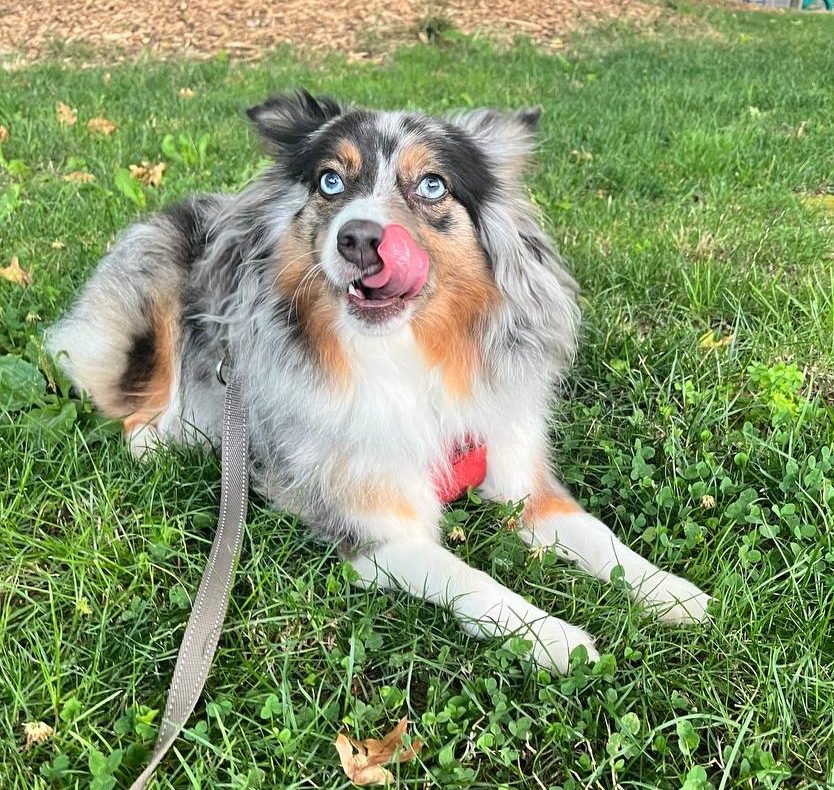
When I first brought Cookie home, I was all in. Like many high-energy or working dog owners, I threw myself into giving her the “best life” possible: endless running, chasing, hikes, puzzles, training, you name it. If Cookie looked a little restless, I responded with more activity. I had this belief, one I now recognize as misguided, that a tired dog is a good dog. But what I missed was this: a calm dog is a happy dog. And calm isn’t something that just happens after hours of stimulation. It’s something that needs to be taught, practiced, and valued.
I learned this lesson the hard way, but thankfully, I learned it early!
The Big Mistake (That Many of Us Make)
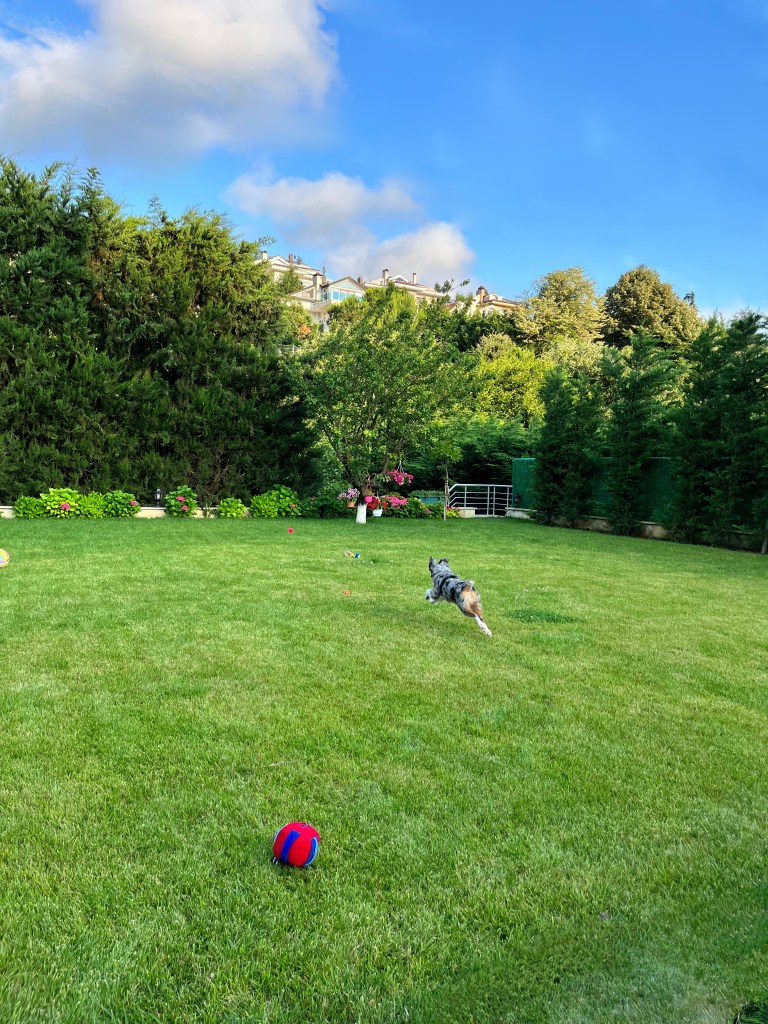
Cookie is wired to work. Her mind is always on, always scanning, always ready to go. So, I thought my job was to constantly do with her: train, play, move, move, move. She loved it, but I noticed something strange. After hours of hiking and games, Cookie wasn’t mellowing out. In fact, sometimes she seemed more amped up.
She didn’t know how to just be. And, honestly, neither did I.
The Art of Doing Nothing
One day, after a particularly chaotic afternoon of trying to tire her out, I realized something had to change. She was exhausted but still buzzing. I sat down, leashed her beside me, and just… stopped. No commands. No toys. No plans. I had no idea then, but that moment was the start of something really important.
Doing nothing isn’t actually doing nothing. It’s about teaching your dog how to relax. Not by exhausting them, but by helping them feel safe and comfortable simply existing.
What It Looks Like For Us
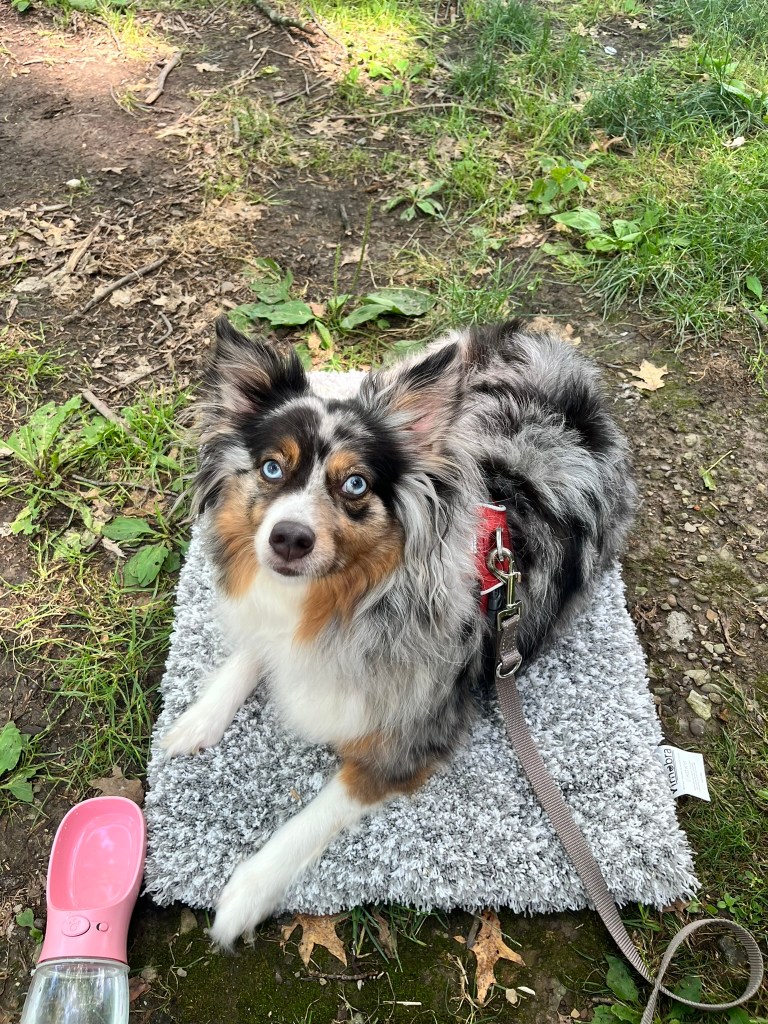
With Cookie, I started small. We introduced the “doing nothing” exercise in the house first. I’d sit on the couch with her mat nearby, no TV, no phone, no commands. Just me breathing, relaxing, and being present. I’d have a leash on her (especially early on), not to restrain, but to keep her from pacing or seeking constant engagement.
At first, she found it boring. She’d whine a little, nudge me, paw at the mat. I’d gently guide her back, stay quiet, and let her figure it out. The first few sessions were short, 15 minutes max. I would give her treats on the mat or a stick to chew on to get her love the mat. Over time, she started settling quicker. Her breathing would slow. She’d lay down. Eventually, she started seeking out that mat and those moments of peace.
We now incorporate it into our daily rhythm. Sometimes it’s structured, with the mat and leash. Other times it’s totally spontaneous: after a long walk, we find a bench or patch of grass and just sit. I watch the world, she sniffs the breeze. That’s it.
It’s become one of my favorite parts of the day.
Why It Works
- It helps with overstimulation. Cookie is naturally alert, always watching and listening. These calm sessions help her decompress and feel safe.
- It builds patience and impulse control. She’s learned that she doesn’t have to always be doing something to be okay.
- It strengthens our bond. Sitting quietly together is surprisingly powerful.
- It carries over into other situations. Vet waiting rooms, visiting friends, car rides, she is learning how to settle because we practice it in the house, in the balcony, at the park.
How It Helped Me, Too
What surprised me most was how much I needed this practice too. I was diagnosed with ADD and anxiety as an adult, and I’ve spent most of my life in a state of constant motion and distraction. My thoughts bounce around, my body carries tension, and I rarely feel truly still.
When I started practicing the art of doing nothing with Cookie, I realized I was also practicing it for myself. No phone. No plans. Just breathing. Just noticing.
I started to feel my muscles relax. My jaw unclenched. I began to hear things again, birds, wind through trees, Cookie’s calm breathing. I could smell the grass, feel the sun, and slowly, my racing thoughts started to quiet. My body remembered what calm felt like.
These short pauses have become a kind of reset button for me. They’ve helped me manage the overwhelm, find clarity, and just exist without needing to perform or achieve something.
Cookie and I are learning this skill together, how to just be. Sometimes she looks up at me mid-sit, and it feels like we’re taking that deep breath together.
Practical Tips
Here’s what worked for us:
- Start at home where it’s quiet.
- Keep it short at first, 5 to 15 minutes.
- Use a mat or blanket to create a relaxed space. We use a nonslip bathroom rug, and Cookie loves it 😅 It is easy to carry around and clean. For our balcony we use an elevated dog bed.
- Let calm happen naturally. No cues, no commands. After a while you can incorporate a command. We are working on the cue “place.”
- Be patient. With your dog and with yourself.

The Mindset Shift
What really changed wasn’t just Cookie, it was me. I stopped seeing her as something to manage and started seeing her as someone to live with. I let go of constant doing and leaned into just being.
We still go on big hikes. We still train and play. But now, the quiet moments are just as important. I don’t just want her tired. I want her content. And I want to be content, too.
Final Thoughts
If you have a high-energy or working dog, I know how easy it is to fall into the trap of doing more. But sometimes, what we both need most is less.
Find a patch of grass. Sit. Breathe. Let your dog settle next to you.
No goals. No expectations.
Just be. Together.
That’s the art.
With love, Cookie & Seda 🌳
👉 What are your favorite settling or calming practices with your dog? I’d love to hear about them in the comments!
 Bytesize Cookie