

The sun is out, the trails are calling, and summer adventures with your dog feel perfect until you remember: oh no, ticks are out too!
After three years of hiking safely without an incident, my dog Cookie and I had our first real tick scare this summer. We usually hiked in cooler seasons, and in past summers, we traveled to Istanbul, where even the most rural places are relatively low-risk for ticks. This year, however, we stayed in Pittsburgh — right in the heart of lush, wooded, tick-friendly terrain.
After a short hike, we found a dead female Lone Star tick attached to Cookie. Thanks to her flea and tick preventative, the tick had died before embedding deeply. Still, I panicked. I realized how little I actually knew about what to do in that moment. I also made a mistake: I didn’t take a photo or save the tick. Ideally, you should always save the tick in a sealed bag (freezing it is best) for identification and potential testing.
This experience made me realize how crucial it is to be prepared. So here’s everything you need to know to protect your dog (and yourself) from ticks this season.
What Exactly Are Ticks?
Ticks are eight-legged external parasites, related to spiders and mites, that feed on the blood of animals and humans. Unlike fleas, ticks don’t jump or fly; they wait in grasses or shrubs and grab onto hosts as you or your dog brush past. Once aboard, a tick will bite and embed its head into the skin, secreting a cement-like saliva to stay firmly attached. Ticks then gorge on blood for days, swelling to many times their original size…
A tick’s life cycle has four stages – egg, larva, nymph, and adult – and can take 2-3 years to complete. At each stage (after hatching), the tick needs a blood meal from a host. This is why ticks are vectors for disease: when they bite, they can transmit bacteria, viruses, or parasites picked up from previous hosts. Many ticks can survive cold winters and go dormant, then become active as soon as temperatures rise in spring. In fact, ticks are often most active in late spring and summer though in some regions they can be a year-round threat.
Why worry so much about these little critters? Besides being creepy, ticks can make dogs (and people) very sick. They can cause skin irritation or localized infections at the bite site, anemia from blood loss if many ticks attach, and even tick paralysis (a rare condition where a toxin in the tick’s saliva causes weakness in the host). Most importantly, ticks spread a variety of dangerous diseases.
Common Tick-Borne Diseases in Dogs
When ticks feed, they can transmit disease-causing organisms. Many of these pathogens infect both dogs and humans. Here are some of the most common tick-borne diseases to watch out for:
- Lyme Disease: Caused by Borrelia bacteria transmitted primarily by the deer tick (Ixodes scapularis). Lyme disease can cause fever, swollen lymph nodes, lethargy, loss of appetite, and painful joint inflammation leading to lameness. Dogs might not show the telltale bull’s-eye rash that humans do, so look for more subtle signs like limping or stiffness. Lyme is treatable with antibiotics, but it’s best caught early.
- Ehrlichiosis: Caused by Ehrlichia bacteria, often spread by the Lone Star tick and the brown dog tick. It can attack a dog’s white blood cells. Symptoms can include fever, lack of energy, swollen lymph nodes, bruising or nosebleeds, and joint pain. Vets often do blood tests to diagnose ehrlichiosis and will treat it with antibiotics.
- Rocky Mountain Spotted Fever (RMSF): Caused by Rickettsia bacteria, transmitted by the American dog tick (and others). RMSF can lead to high fever, loss of appetite, joint pain, and sometimes neurological signs. It’s serious – in dogs it may cause symptoms within 2 weeks of a bite. Prompt treatment is critical.
- Anaplasmosis: Caused by Anaplasma bacteria, carried by blacklegged (deer) ticks. It often causes fever, joint pain, and lethargy similar to Lyme. Dogs may also have low platelet counts, leading to bleeding issues.
- Babesiosis, Tularemia, and Others: Ticks can transmit many other illnesses (babesiosis is a parasite that infects red blood cells, tularemia is a bacterial infection, etc.), but these are less common than the four listed above. In some areas, ticks can even carry multiple pathogens, potentially infecting a dog with more than one disease at once.
Keep in mind that symptoms of tick-borne diseases can be delayed – often appearing 1-3 weeks after the tick bite. That’s why prevention and vigilant post-bite monitoring are so important (more on that below).
Ticks to Know: Common Species and Where They Live
There are many tick species, but a few usual suspects account for most of the ticks found on dogs in the United States:
- American Dog Tick (Dermacentor variabilis): Sometimes called the wood tick, this brown tick with whitish markings is found widely across the U.S. (especially east of the Rockies and in some Pacific Coast areas). It likes open fields, grassy meadows, and trail edges. American dog ticks can transmit RMSF and tularemia, and females can cause tick paralysis in dogs if attached near the spine.
- Blacklegged Tick (Ixodes scapularis), aka Deer Tick: A smaller tick found primarily in the Eastern and Upper Midwestern U.S. (a western relative, Ixodes pacificus, lives on the Pacific Coast). It prefers wooded areas and leaf litter. Deer ticks are the primary carriers of Lyme disease (as well as anaplasmosis and a form of babesiosis). They’re notorious for transmitting Lyme to both dogs and humans.
- Lone Star Tick (Amblyomma americanum): Named for the single star-like white spot on the female’s back, this tick is common in the Southeastern and Eastern states and is aggressively expanding its range northward. Lone Star ticks live in wooded areas and grassy fields and will readily bite dogs and humans. They can transmit ehrlichiosis and other illnesses. (Fun fact: Lone Star tick bites can cause some people to develop an allergy to red meat – yikes! But that’s another story.)
- Brown Dog Tick (Rhipicephalus sanguineus): This reddish-brown tick is unusual in that it thrives indoors as well as outdoors. It’s found throughout the U.S. (and the world) wherever there are dogs. Brown dog ticks can infest homes and kennels, hiding in cracks, bedding, and furniture. They primarily feed on dogs and can carry diseases like ehrlichiosis and babesiosis. If you find ticks crawling on your walls or dog’s bedding, it’s likely this species.

Other ticks you might hear about include the Rocky Mountain wood tick (out West, similar to the dog tick) and the newer Asian longhorned tick (an invasive species recently found in parts of the U.S.). But the four listed above are the ones most dog owners will encounter. Regardless of species, all ticks should be considered potential carriers of disease. So, let’s focus on how to prevent tick bites and what to do if you find a tick on your dog.
Tick Prevention Strategies
Keeping your dog tick-free requires a combination of approaches. Here are the most effective strategies to prevent tick bites:
- Use Vet-Recommended Tick Preventatives: Year-round flea and tick prevention is your first line of defense. There are chewable oral medications, topical “spot-on” treatments, and tick collars – many options that kill or repel ticks before they can transmit disease. Speak with your veterinarian about the best product for your dog. Never use products intended for humans or other animals on your dog – for example, DEET is toxic to dogs, so don’t spray your dog with your insect repellent. Keep in mind that preventatives greatly reduce the chance of infection but are not 100% foolproof. A tick might still bite before the chemical kills it, so you should still do regular tick checks.
- Avoid Tick Habitats on Walks: Ticks don’t jump or fly; they wait on vegetation and grab onto hosts as they pass by. When hiking, stick to the center of trails and avoid brushing against tall grass or shrubbery where ticks lie in wait. If you’re in a high-tick area, consider wearing long sleeves and pants (and even lightly spraying your clothes with dog-safe repellent like permethrin or picaridin). For your dog, consider a doggy hiking jacket or vest if practical – it’s not foolproof, but less exposed fur can mean fewer places for ticks to latch on. Around your yard, keep the grass mowed short and clear away tall weeds to make it less tick friendly. Ticks also thrive in leaf piles and wooded debris, so regular yard cleanup helps.
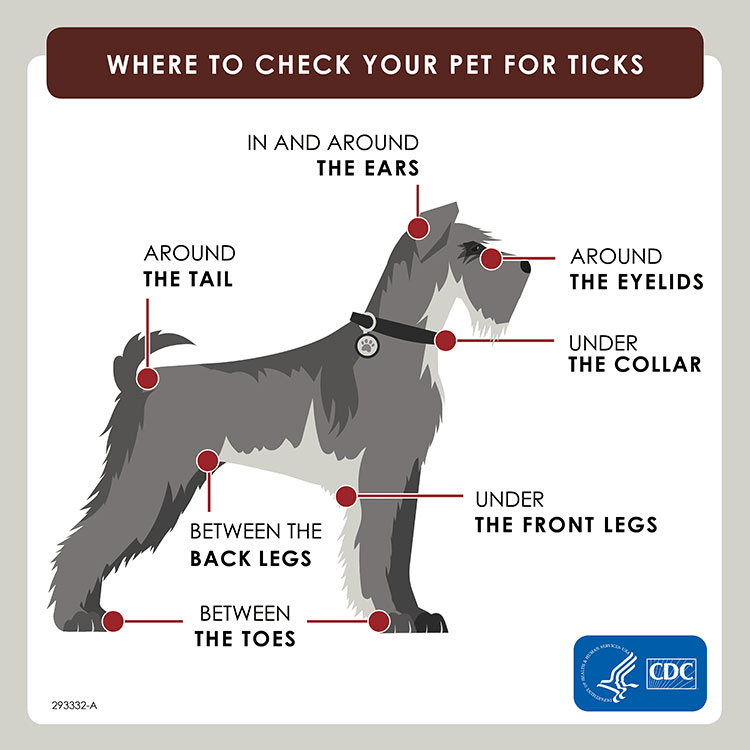
- Do a Tick Check After Every Outing: No matter where you’ve been, it’s wise to inspect your dog when you come back inside. Run your hands through your dog’s fur, feeling for any small bumps or embedded ticks. Ticks love to hide in warm, dark areas on a dog’s body – common spots to check include in and around the ears, around the eyelids, under the collar, under the front legs (armpits), between the back legs (groin), between the toes, and around the tail. Take a few minutes to thoroughly check these areas. On light-colored or short-haired dogs, you might spot a tick crawling. On darker or long-haired dogs, you have to feel for them. Don’t forget to check yourself too after outdoor adventures!
- Try a Lint Roller “Tick Sweep”: Here’s a pro tip I picked up: carrying a sticky lint roller on hikes or walks. Before getting back in the car or house, roll it over your dog’s coat (and your clothes). This can pick up any ticks that are hitchhiking but haven’t attached yet. It’s a fast way to catch tiny nymph ticks that you might otherwise miss. (Of course, it won’t remove ticks that have already latched on, but it can prevent some from ever biting.)
What to Do If You Find a Tick on Your Dog
Despite our best efforts, it can happen – you’re petting your dog and suddenly you feel that telltale bump, or you spot a tick embedded in the skin. Don’t panic! Here’s how to remove a tick safely and what to do next:
1. Stay Calm and Gather Supplies. If your dog is wiggly, enlist someone to help gently restrain or distract her with treats. Put on latex or rubber gloves if you have them, you want to avoid direct contact with the tick, because squeezing it with bare fingers could expose you to pathogens. Grab a pair of fine-tipped tweezers (or a tick removal tool if you have one). Have a clean zip-lock bag or a small screw-top jar ready to save the tick and put a bit of rubbing alcohol in it if available. (Ticks can be surprisingly hardy, so alcohol or a sealed bag will ensure it’s dead.) It’s also a good idea to have some disinfectant (like alcohol or iodine) and cotton balls on hand for after removal.
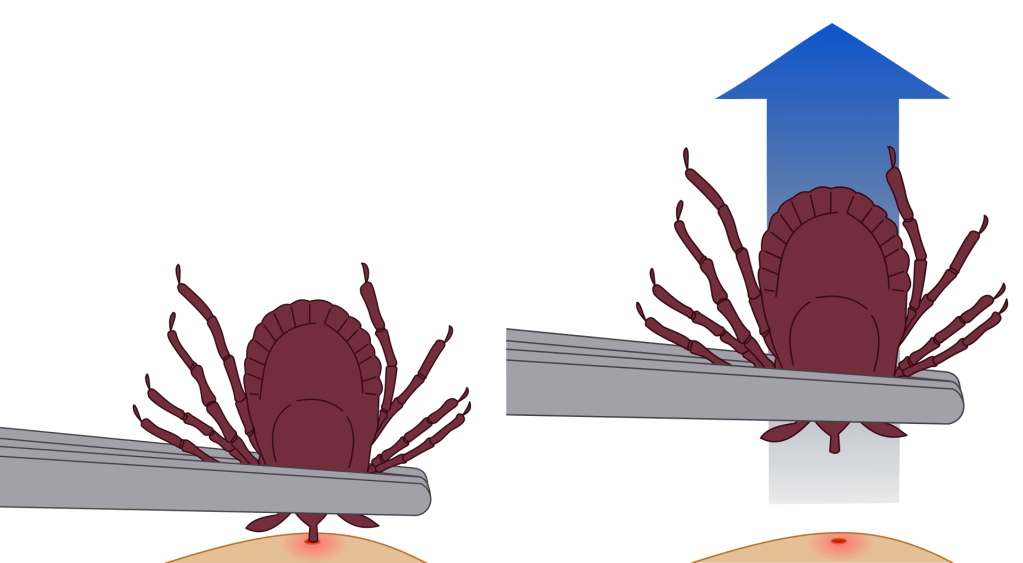
2. Remove the Tick Carefully: Using the tweezers, grasp the tick as close to the skin as possible, right at the head where it’s attached. Do not grab the tick’s swollen belly, as you could squish bacteria into your dog or cause the tick to rupture. Once you have a firm grip, pull the tick straight out with steady, even pressure. Do not twist or jerk the tick, the goal is to pull it out in one piece. It may take a slow, steady pull for a few seconds. The tick’s mouthparts are barbed, so it can feel a bit stuck. Just keep pulling with consistent pressure until it releases. Do not be alarmed if a small piece of the head or mouthparts remains in the skin; sometimes this happens. If so, you can try to tease it out like a splinter, but if it’s too deeply embedded, don’t dig at it, clean the area and let the skin heal, as it will often expel the tiny fragment on its own. Important: Don’t grab the tick by hand, burn it with a match, or apply petroleum jelly or chemicals. Those “folk remedies” do more harm than good – they can cause the tick to regurgitate into the wound, increasing infection risk.
3. Secure the Tick in a Bag or Jar: The tick is off – don’t lose it! Drop it into your prepared bag or jar. Many experts recommend saving the tick for identification or testing, especially if your dog or anyone in your family falls ill later. You can keep the tick in the freezer to preserve it. If you’re squeamish, you can first kill it by submersing it in alcohol or soapy water but still save the body. If you absolutely do not want to save it, dispose of it by flushing it or wrapping it tightly in tape, do not crush a tick with your fingers; that can spread bacteria.
4. Clean the Bite Area and Monitor: Once the tick is removed, clean your dog’s skin at the bite site with rubbing alcohol, iodine, or soap and water. Clean your tweezers with alcohol as well. Wash your hands thoroughly (even if you wore gloves). Give your pup a treat for being good! Over the next week or two, keep an eye on the bite area. A small red bump or a bit of irritation is normal after tick removal. However, if you notice worsening redness, swelling, or oozing, it could be an infection or tick-bite reaction – have your vet take a look, and be sure to show them the tick you saved!
5. Watch Your Dog for Any Signs of Illness: This part is critical. Symptoms of tick-borne diseases can take days or weeks to appear, so after a tick bite, monitor your dog closely for a few weeks. Keep an eye out for fever, loss of appetite, low energy, limping or joint swelling, swollen lymph nodes, coughing, or unusual bleeding. Basically, any change in behavior or health – don’t dismiss it. If your dog shows any signs of illness in the weeks after a tick bite, call your vet. Common tick diseases like Lyme and ehrlichiosis are typically treatable if caught early. Let your vet know that a tick was attached and when; you can also bring the tick (or a photo of it) to the vet for identification. In many cases, vets may preemptively test for tick-borne infections or start treatment based on symptoms. Early intervention can make a big difference.
👉 If you were the tick’s host instead of your dog, the steps are similar: remove it carefully, disinfect, save the tick, and watch yourself for flu-like symptoms or rashes, and see a doctor if any develop.
After a Tick Bite: Know the Symptoms to Watch For
It’s easy to feel anxious after finding a tick, but knowledge is power. Most tick-borne illnesses in dogs show some combination of the following symptoms after an incubation period (often 7-14 days post-bite):
- Fever: One of the earliest signs can be a fever (normal dog temperature is ~101–102.5°F, so anything over ~103.5°F is a concern).
- Lethargy and Depression: Your dog might seem unusually tired, droopy, or reluctant to play/exercise.
- Loss of Appetite: Skipping meals or showing less interest in food can signal something’s wrong.
- Painful or Swollen Joints: You might notice your dog limping, having difficulty getting up, or yelping when moving – this is common with Lyme disease and others. Sometimes the lameness shifts from one leg to another.
- Swollen Lymph Nodes: Check under your dog’s jaw and in front of the shoulders – tick-borne diseases can cause these glands to enlarge.
- Bruising or Bleeding: Some infections (like ehrlichiosis) affect blood cells and clotting, leading to nosebleeds, tiny red-purple spots on the gums or belly, or unexplained bruises.
- Neurological Signs: In rare cases, a heavy tick infestation or certain toxins can cause muscle weakness, wobbliness, or even partial paralysis (for example, tick paralysis can make a dog limp or unable to stand properly). This usually resolves after ticks are removed, but any such symptom should be treated as an emergency.
If you observe any of these issues after a known tick bite (or anytime your dog is unwell), get veterinary advice. Be sure to mention the tick and provide the saved tick if you have it – identifying the species can help the vet know what diseases to test for. Even if you don’t see symptoms, some vets will perform a screening snap test at your dog’s next check-up if you inform them of a tick bite, just to rule out infections. The good news is that with prompt treatment, most tick-borne diseases in dogs can be managed or cured. Lyme disease, for example, is usually treated with a course of antibiotics, and dogs often start feeling better within a couple of days of treatment
Tick Prevention & Action Checklist ✅
To wrap up, here’s a handy checklist to keep in mind during tick season:
- ✔️ Keep up with tick preventatives – use vet-approved collars, topicals, or oral meds year-round to kill ticks before they transmit disease.
- ✔️ Avoid known tick hot spots when possible – stick to clear trails and mow your yard to discourage ticks.
- ✔️ Do a thorough tick check on your dog (and yourself) after every outdoor adventure. Remember the hidden spots: ears, neck, armpits, groin, between toes, under tail.
- ✔️ Use a lint roller on your dog’s coat and your clothing after hikes to pick up any loose ticks.
- ✔️ If you find a tick, remove it ASAP – don’t wait! Use fine-tipped tweezers and pull straight out with steady pressure.
- ✔️ Save the tick in a zip-lock bag (freeze it or add alcohol) for identification/testing later.
- ✔️ Disinfect the bite area and wash your hands and tools after removal.
- ✔️ Watch your dog for the next few weeks for any signs of illness (fever, limping, low appetite, etc.) and call the vet if you notice anything off.
- ✔️ Consider getting your dog tested for tick-borne diseases a few weeks after the bite, or sooner if symptoms arise – early detection is key.
- ✔️ Stay educated and prepared – know which ticks are common in your area and the diseases they carry. Knowledge helps you act quickly and calmly.
By being proactive and vigilant, you can hugely reduce the risk that a tick will harm your furry friend. Ticks may be part of nature’s package deal, but with preventive care and prompt action, we can keep our dogs safe and enjoy the great outdoors with peace of mind.
Stay safe out there and give your pup an extra belly rub (while checking for ticks, of course)! Love from Cookie and Seda 💞🐾

Use our code COOKIE20 to get yourself one!
Sources
- Centers for Disease Control and Prevention (CDC) – Preventing Ticks on Pets
- Centers for Disease Control and Prevention (CDC) – What to Do After a Tick Bite: How to Remove a Tick
- ASPCA – Fleas and Ticks: Tick Removal and Prevention Tips
- AKC Canine Health Foundation – Tick-Borne Disease: Prevalence, Prevention, and Treatment
- Montana State University Extension – Ticks on Companion Animals
- McCann Professional Dog Trainers (Shannon Viljasoo) – Trail Tips to Avoid Ticks!
 Bytesize Cookie