

Taking care of someone else’s cats means tuning in to the hush between moments: the creak of the old floorboards, the way sunlight pools on the couch, the sound of a cat landing softly on the windowsill.
For years, my days moved with the lives of two cats. Chachi (13) came first. She was old, set in her ways, and didn’t care much for people. Each time I visited, I set out her medicine, filled her food and water, cleaned the litter box, and sat nearby, never expecting more than she wanted to give. Chachi made her boundaries clear. She hissed when she wanted, took her pills when she felt like it, and drank water from a glass on the coffee table. Her favorite spot on the couch showed where she always lay, a patch of fur pressed into the cushion and the faintest musty scent of her warmth. The lamp’s warm light made the room feel softer, and in the winter, I could almost hear the radiator’s sigh while she watched me from her place.
I learned to notice the signs, if she had eaten, if the litter was used, as a way to understand her. Over time, I got used to her quiet ways, learning the difference between being alone and being lonely, between not caring and a careful trust. Sometimes, when she let me sit a little closer, I remembered my own first apartment, how I learned to find comfort in silence, how I, too, learned that trust doesn’t arrive all at once.

Then Heathcliff (1) arrived. He was young, full of energy, and always moving, his paws skittering on the wood floors, his bell jingling down the hall. With him, the apartment changed. I had to make sure Chachi’s peace wasn’t disturbed while Heathcliff played somewhere else. The apartment became a lesson in managing a household: moving toys, closing doors, splitting my attention, and listening for the distant crash of something knocked over in the next room. Chachi kept to her space, curling into the velvet dip of her couch, and Heathcliff made his own kind of mess, scattering dry food and leaving tufts of fur on the rugs. The two cats mostly stayed apart, and I found myself in the middle, a bridge between old routines and new chaos. Over time, I realized I was changing too, learning patience, becoming attuned to the shifting moods of the apartment, and noticing that I felt less like a visitor and more like a steady presence in their small world.
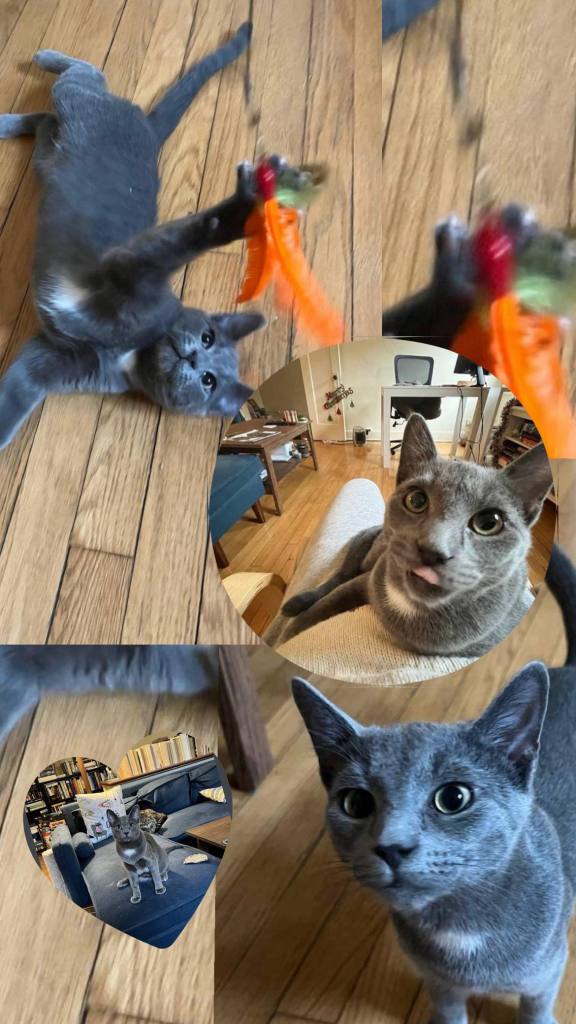
Last week, when the owner told me I’d be looking after Heathcliff alone, the news felt quietly heavy. There was no big announcement, just a simple change. Still, I felt it. Chachi was never really my friend. She didn’t come to me or show affection. She put up with me: the hands that gave her medicine, the voice that talked to her while I cleaned. But now that she’s gone, her absence is clear. The apartment feels emptier; the air seems stiller, and I sometimes catch myself listening for her low, throaty purr or the sharp click of her claws on tile.
Grief in these routines isn’t loud. It’s just realizing that a set of small tasks and quiet moments has ended. The habits that shaped my visits, her careful sips of water, her silent looks from the couch, the faint scent of her fur, are now memories, replaced by a quieter, emptier kind of care. I find myself lingering by the couch, brushing my hand over the worn cushion, grateful for the small ways she let me in. I think I learned something from her: that even the most guarded hearts can teach us a little about trust, and about ourselves.
The apartment still shows signs of her. The couch keeps its hollow, the faintest trace of her scent lingering beneath the upholstery. The glass remains on the coffee table, catching the late afternoon light.
I’ll keep looking after Heathcliff, chasing after his wild energy, and in those routines, a part of Chachi will stay with me. Sometimes, when the apartment is quiet and dusk is settling in, I imagine Chachi is still there, watching from her corner of the couch.
Rest in peace, Chachi. I’ll remember your spot on the couch under the steady lamp, and I’ll remember how you taught me to listen for what isn’t said.
 Bytesize Cookie