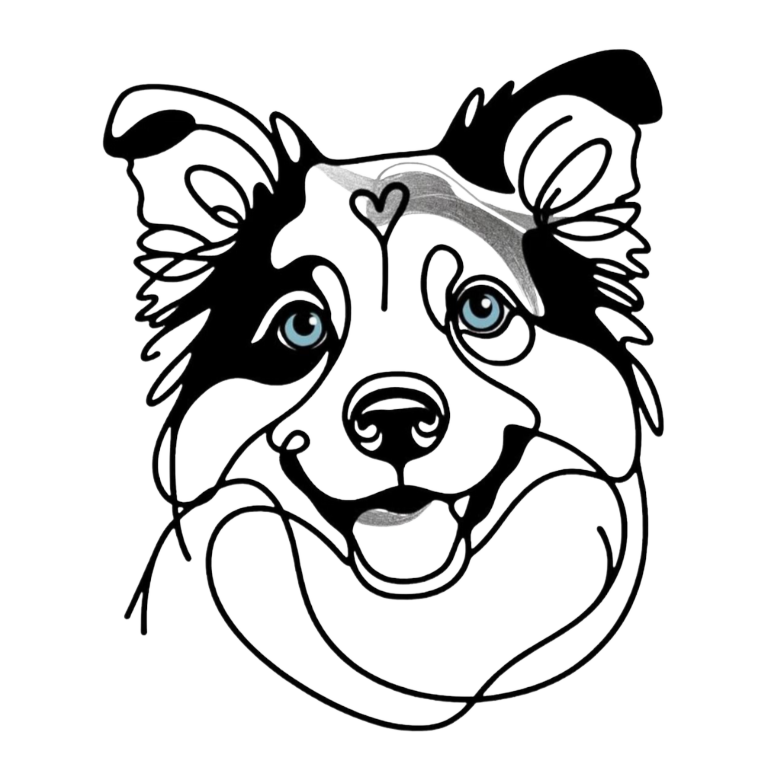
The geese are on the roof of the house across the street this morning, honking in a messy choir until the noise somehow becomes rhythm. Cookie is in the yard doing her business and I am standing at the back door in my slippers, holding a glass of water and a small white pill. It is cold out, about 20°F, but I have stopped checking the weather. I have stopped checking my email. I have stopped wondering whether I took my medication yesterday or the day before. I just take it now, standing here, watching the birds while Cookie snuffles at the frozen grass.
This is how we make it through the winter. Stop thinking. Move.
Ten years ago I was a sociology student, reading heavy books that needed a sharp mind. Mine was sharp then, until one day it was not. I started losing simple words in the middle of sentences. Once I sat in a café with a friend, shivering because the radiator had failed, and I wanted her to hand me my coat. I could see the coat, feel the cold on my arms, but the word coat vanished. I pointed. I opened my mouth. Nothing. Panic took over the conversation and the rest of the afternoon.
I still have that problem. Sometimes a sentence will leak out of my mouth and stall on a single, ordinary word. I forget names of films I have loved, whole scenes from books I have read, or the line of a joke I was halfway through telling. It is a small, humiliating amnesia that feels as if the wiring in my head misplaces the simplest things. It is not always constant, but it is frequent enough to be its own kind of grief. You lose a piece of yourself with every vanished word.
My mother used to say, “Depression is a luxury we do not have.” She meant it kindly but plainly. She had been sent away to a religious boarding school at twelve, and for her the yardstick of real pain was hard and physical. If you had time to be sad, then you had too much time. That voice lived in my head for years. It followed me through a PhD program, through a diagnosis of ADHD and depression six years ago, and into every pharmacy line. It told me that needing medication to get out of bed was weakness. It told me I should be able to will myself better.
So I learned to skip doses. Sometimes I skipped because I convinced myself I was fine. Sometimes I skipped because I wanted to prove I could be fine without help. Then guilt and self-hatred arrived and tightened the loop. Skipping would make the next day harder, or foggier, or emptier of the small drives that matter. The punishment I imposed on myself for needing help became another symptom to manage.
Then Cookie arrived. She was high energy and joyful and needed games, miles of walking and patient training. At first the walks were a gift. We hiked quiet trails in the mornings and my head calmed. Then she became reactive. A dog, a stroller, a truck, a person in a puffy jacket could set her off into barking and lunging. Every outing I planned risked a public scene and private shame.
My executive dysfunction made this worse. On bad days I could not get off the couch. Not because I did not love Cookie. Not because I was lazy. Because my brain would not turn the thought walk the dog into action. The gap felt like an ocean. I would lie there while she paced, leash scraping the floor. I started micromanaging my husband instead. I sent training links at odd hours and corrected the way he held the leash. He never complained. He only said once, “Sometimes, I want to spend time with you without Cookie.” He was right.
Last winter was the breaking point. I sat on the edge of the bed fully dressed in my coat and boots, Cookie by the door with her leash, and I could not stand up. Not would not. Could not. My body would not obey. I sat there for ten minutes, angry and hot with self-hatred. I hated that I needed chemicals to be functional. I hated that I could not push through like my mother would have. I hated that my brain had wiring that sometimes failed.
That anger was the turning point. I realized I was punishing myself for having a body that needs help. So I stopped fighting my biology and started building systems that worked with it. Not perfect systems. Just ones that let us live.
My system is simple now. I follow a short script each morning so I do not have to think about whether I should take my meds. I get up, wash my face, fill Cookie’s bowl, put a small pouch in my fanny pack by the door, and take my medication standing at the window while Cookie sniffs the yard. The rest of the morning is training, walks, and dissertation tasks that prime the day. I keep reminders on my phone and a pill organizer in plain sight. When I forget, the routine nudges me back, and I try not to turn a missed dose into a moral failing.
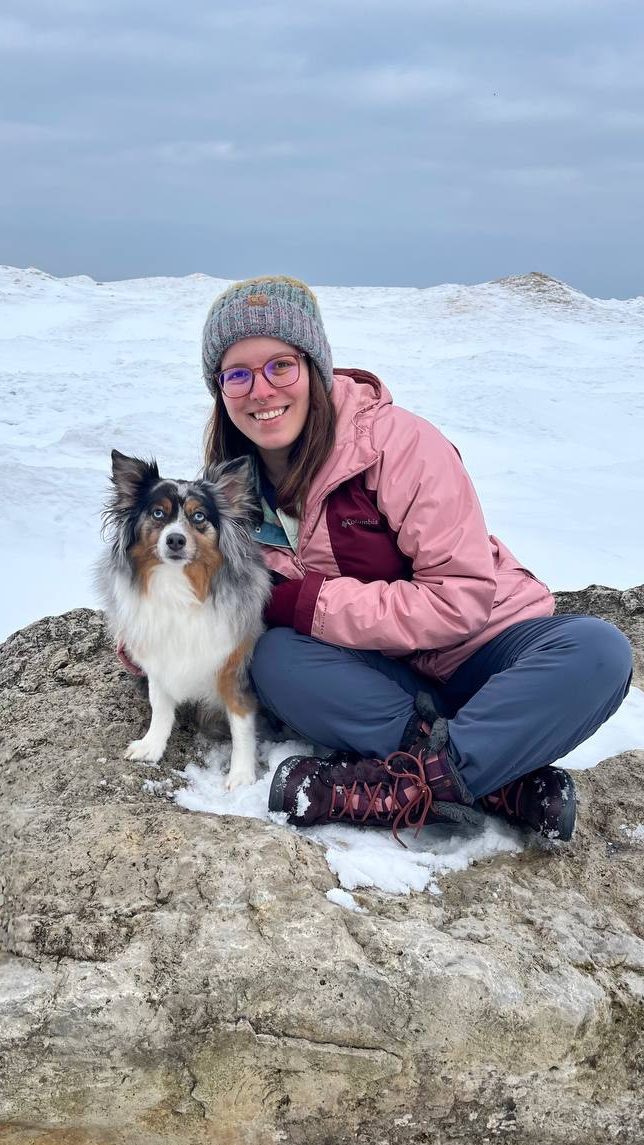
I am still imperfect at this. Sometimes shame convinces me that skipping a pill is evidence of strength, or that taking one is proof of failure. I am learning to treat those thoughts the way I treat Cookie’s barking: acknowledge them, do not feed them, and carry on. Medication and therapy are not admissions of defeat. They are tools I use first for myself, so I can be steady and whole. Only then can I truly show up for Cookie, for my husband, and for the books and films that remind me I am larger than my fog.
If you are reading this and you recognize the shape of your days, the dog owner who loves their pet but sometimes cannot get off the couch, who carries that voice telling you to try harder, know this: you are not alone. The geese do not care if you are having a hard day. They sit on roofs or fly over and they keep being geese. Your dog does not need a perfect owner. They need you, imperfect and trying, here tomorrow.
Depression is not a luxury. It is weather. And even in Ontario, where winters are long and the lake freezes over, spring comes. The ice cracks. We put on our coats and boots and scarves, all the words for warmth, and we step outside again.
Cookie & Seda 🌸
 Bytesize Cookie